David Betz | From Migration to Civil War
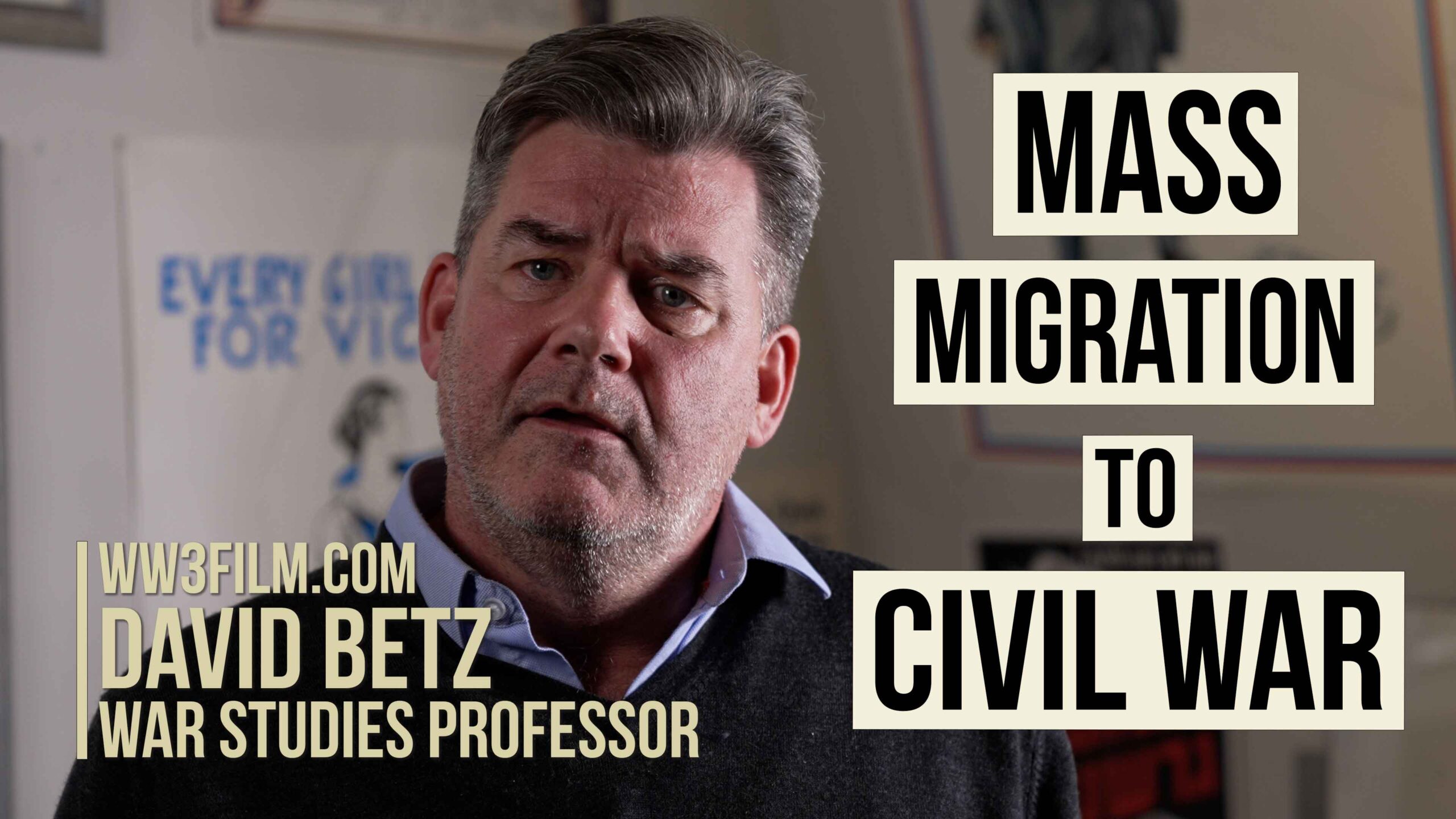
There’s a reason David Betz’s paper “The Future of War is Civil War” went viral in places you’d never expect a war studies professor to be quoted. In our interview, Betz — a professor at King’s College London’s Department of War Studies who spent decades studying insurgency and counterinsurgency abroad before turning that same lens on his own country — lays out an argument too explosive for most outlets to touch: the historically unprecedented influx of largely unskilled migrants into the US and especially Europe, many barred from working yet fully supported by the state, is not a side issue to the coming era of great-power conflict. It is, in his analysis, one of the central mechanisms quietly dismantling the West’s ability to fight one.
If you value the project, please donate to the cost of it’s production. It has been a herculean task conducting 25 interviews in 7 countries with high level dignitaries to help the public through this tumultuous time.
Betz doesn’t speculate — he traces a direct line from policy to fracture. Across the post-war era, he notes, no major Western party has ever campaigned on expanding mass migration, yet every government has delivered it anyway, at scale, election after election — what he calls a deliberate transformation “via demographic transformation,” citing Tony Blair’s own advisers on their intent to permanently alter Britain’s political landscape through diversity. The result, Betz argues, is a three-way conflict between a native population that feels displaced, an elite that is structurally suspicious of national attachment, and new arrivals caught in the middle — with no non-traumatic way to relieve that tension. He connects it directly to military readiness: when a population feels betrayed by its own government, its willingness to sacrifice — to send its sons and daughters to fight — collapses, which is exactly what’s driving recruitment crises across the UK and US right now. It’s a case that is as uncomfortable as it is carefully argued, and it’s exactly why we couldn’t leave it out of a documentary about the fault lines leading toward a Third World War.
This interview is one piece of a much larger picture — the same picture painted by the Prince of Liechtenstein, Lawrence Wilkerson, Godfrey Bloom, and other voices in WW3: The Documentary, all pointing to the same uncomfortable truth: empires fall the same way every time, and the signs are all around us now. Watch the full David Betz interview, then see how it fits into the complete film — because understanding these cycles of history is what makes living through this dangerous period more manageable.
Sign up for the newsletter to be notified about new interviews in the series:
We are making this film and interview series independently, and your support matters. Please watch the interview, share it widely, and send it to anyone who wants a deeper understanding of where this moment is headed. If you believe these conversations are necessary, consider donating to help us finish the feature documentary and continue producing the interview series at the highest level. Every contribution helps us reach more viewers before the next crisis becomes the next war.
If you value the project, please donate to the cost of it’s production. It has been a herculean task conducting 25 interviews in 7 countries with high level dignitaries to help the public through this tumultuous time.
Thank you for supporting World War III: The Documentary!
Best,
James Patrick
Director BigPicture.Watch